
According to the latest Rental Price Index released by Trade Me Property, the national median weekly rent increased for the first time in 2026, signaling that rental market conditions may be starting to tighten again. While some major cities continue to experience softer rental prices, several regional markets are seeing stronger demand and rising rents.
For landlords, property investors, and tenants, these changes provide valuable insight into where the rental market could be heading over the coming months.
Read the Full Trade Me Report
For the complete data and regional breakdowns, read the original report here:
Trade Me Property Rental Price Index – April 2026
Key Takeaway #1: National Rents Increased for the First Time This Year
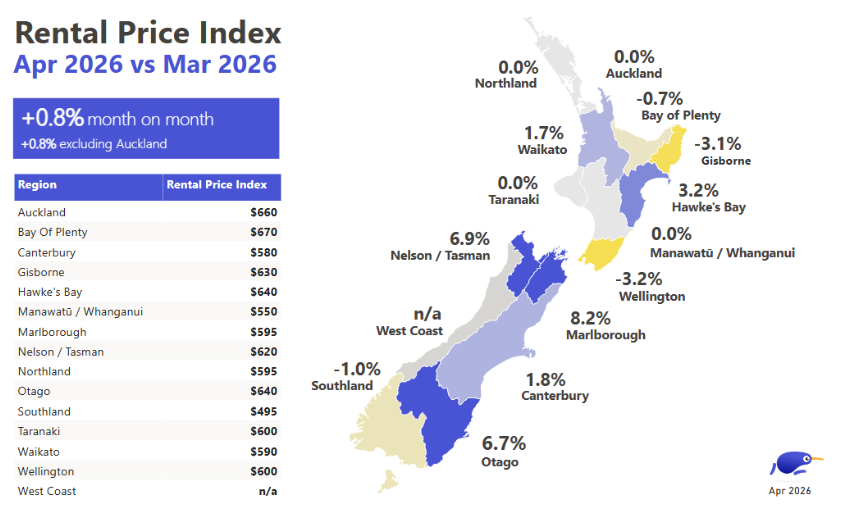
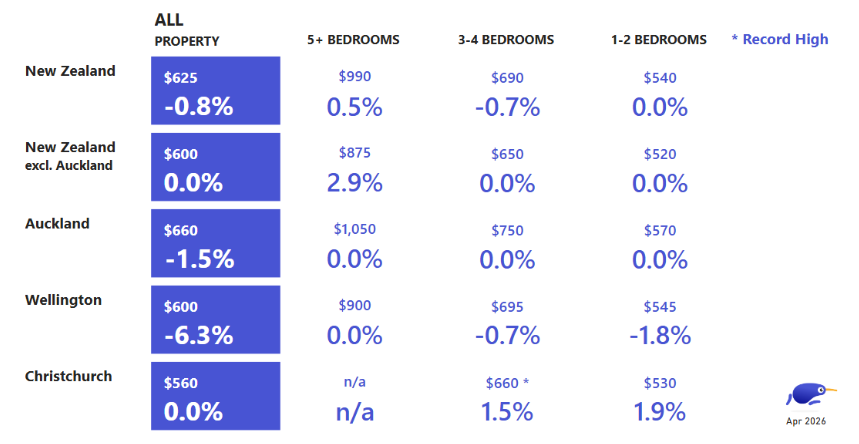
One of the biggest developments from the report is that New Zealand's national median weekly rent increased by $5, reaching $625 per week in April 2026. This marks the first month-on-month increase since November 2025.
While rents remain slightly below the same period last year, the increase suggests that market conditions may be shifting after a period of stability.
Key Takeaway #2: Supply Is Falling While Tenant Demand Is Rising
A major factor driving rental prices is the changing balance between supply and demand.
Trade Me reported that rental listings were down 5% compared to the previous year, while tenant demand increased by 8%. This means renters are facing greater competition for available properties, particularly in regions where supply remains limited.
Historically, when demand begins outpacing supply, rental prices often experience upward pressure.
What This Means for Landlords
Lower vacancy risks
Stronger tenant competition
Potential for improved rental yields
Increased importance of tenant retention
What This Means for Tenants
Fewer available rental options
More competition when applying for properties
Potential rent increases if supply continues tightening
Key Takeaway #3: Regional Markets Are Driving Growth
While many investors focus on New Zealand's largest cities, the strongest rental growth is currently occurring in several regional markets.
According to Trade Me's data:
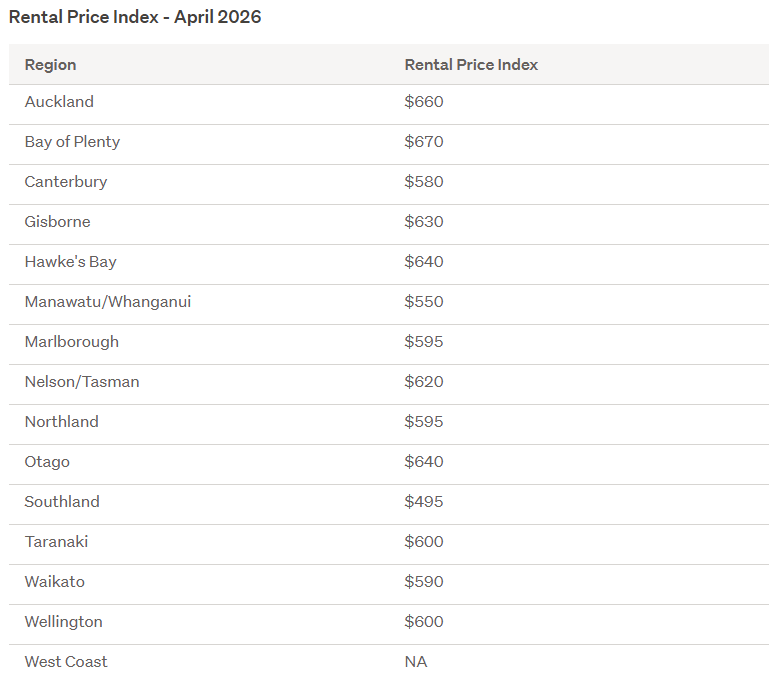
Otago recorded one of the largest annual rent increases.
Bay of Plenty remained the country's most expensive rental region.
Several smaller markets showed strong rental resilience due to limited housing supply.
This highlights an important trend: regional rental markets can often outperform major metropolitan areas when supply becomes constrained.
Key Takeaway #4: Major Cities Are Still Experiencing Pressure
Interestingly, not every market is moving upward.
Trade Me's report shows that some of New Zealand's largest urban centres continue to experience annual rent declines.
Examples include:
Auckland
Wellington
Gisborne
These markets have generally benefited from increased rental supply, giving tenants more choice and reducing upward pricing pressure.
This demonstrates that rental market conditions vary significantly between regions, making local market knowledge increasingly important for property investors.
Key Takeaway #5: Property Type Matters More Than Ever
Another notable insight from the report is that different property types are performing differently.
Trade Me highlighted ongoing changes in demand between:
Apartments
Townhouses
Family homes
The report also noted a record high for family-home rental prices in Christchurch, reflecting continued demand for larger residential properties.
What Property Investors Should Watch Next
Although one month does not confirm a long-term trend, several indicators suggest the rental market may continue tightening:
Falling rental supply
Increasing tenant demand
Strong regional market performance
Stabilising national rental prices
If these conditions continue, landlords may see stronger rental growth throughout the remainder of 2026.
At the same time, market performance will likely remain highly location-specific, making it important for investors to stay informed about local rental trends rather than relying solely on national averages.
The latest Trade Me Rental Price Index suggests that New Zealand's rental market could be entering a new phase after a period of softer conditions.
While major cities remain relatively stable, regional markets are showing stronger momentum, and the widening gap between rental supply and tenant demand is beginning to influence prices again.
For landlords and property investors, understanding these shifts can help guide better decisions around pricing, tenant retention, and long-term investment strategy.
As always, keeping a close eye on market data and local rental conditions remains one of the best ways to stay ahead in an evolving property market.
Source: Trade Me Property Rental Price Index – April 2026.